Know your honey · September 4, 2026 · 4 min read
Florida Red: the Panhandle honey that tastes like nothing else
Black titi blooms along the creek banks of the Florida Panhandle for a few weeks each spring. The honey it makes is red, bold and tangy, and almost nobody outside the region has tried it.
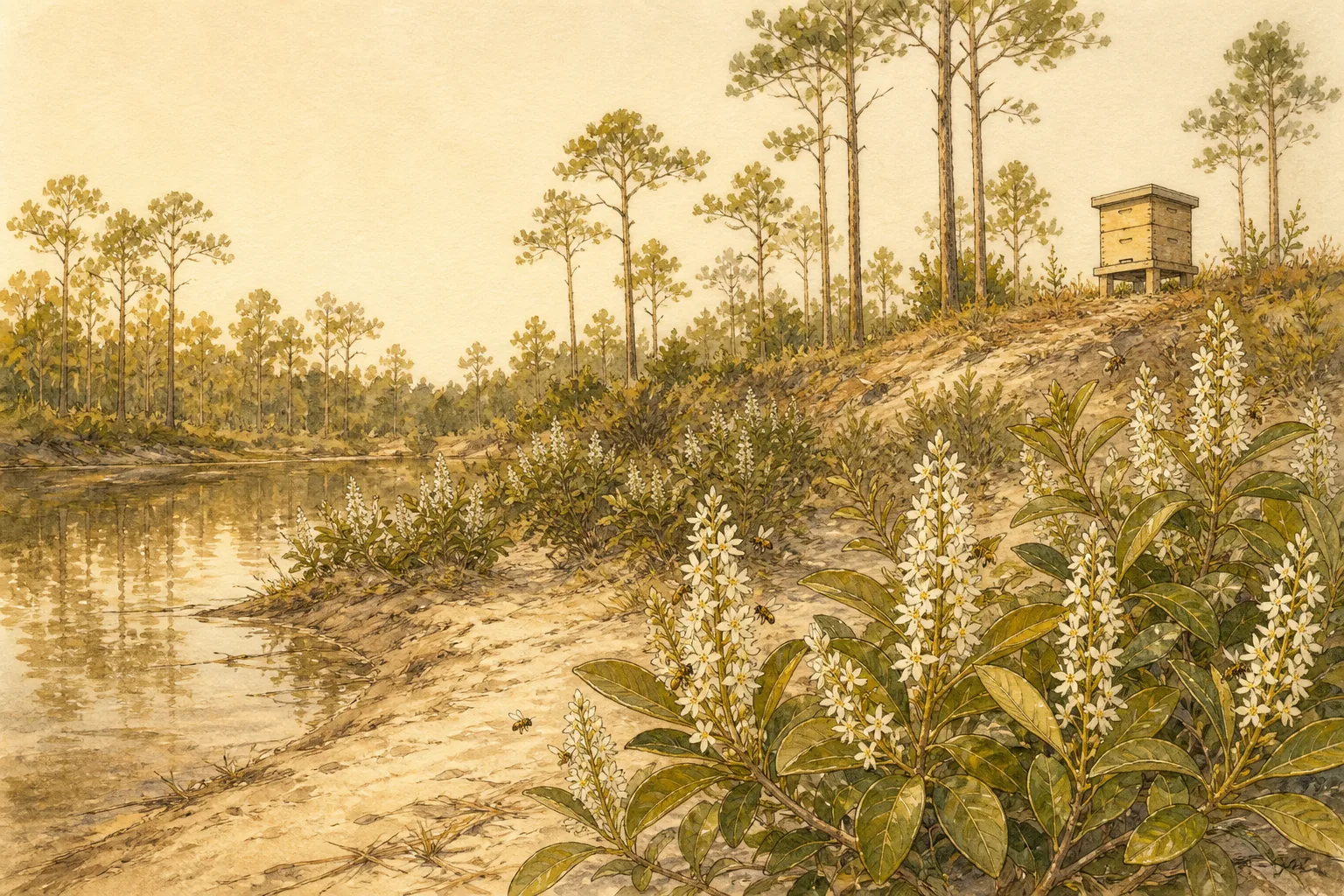
Of our four honeys, Florida Red is the one that makes people stop and ask what it is. It is the color of dark tea with the light behind it, reddish amber, and the flavor is bigger than anything a grocery shelf sells: sweet, then tangy, with a fruit-and-molasses depth that lasts. It comes from a small part of the Florida Panhandle, and the plant that makes it is one most people have never heard of.
The titi
Along the creeks and wet flatwoods of northwest Florida grows a shrub called black titi. It’s an evergreen with glossy leaves that puts up spikes of small white flowers in late February and March, before almost anything else in the region is blooming. To a colony coming out of winter, a stand of titi in flower is the first big meal of the year, and the bees work it hard.
Titi honey on its own is dark and strong. What makes Florida Red is what blooms around and after it: gallberry, wild blueberry, the first spring wildflowers of the flatwoods. Hives set out along the creek bank catch the titi bloom and the early spring flow together, and the result is a honey that carries the depth of the titi with the brightness of the wildflowers on top.
A note for anyone reading up on this: there are two titis. Black titi is the spring one and makes fine honey. Summer titi, a different plant that blooms in early summer, is known for a nectar that can be hard on bee brood, and beekeepers move their hives away from it. Florida Red is the spring bloom only.
What it tastes like
Bold. That’s the first word. If clover is a whisper, Florida Red is someone talking. The sweetness is there, but it arrives with a tang, a little like sorghum or a very ripe fruit, and a long finish with a hint of something almost smoky. People who like dark honeys, buckwheat or chestnut, tend to love it. People who only know clover sometimes need a second taste. Then they get it.
The color is part of the pleasure. Hold a jar up to a window and it glows red.
What it’s for
This is a cooking honey as much as a spoon honey. It stands up to heat and to strong flavors, which mild honeys can’t. Use it in a glaze for pork or ribs, where the tang does the job you’d otherwise want vinegar for. Brush it on roasted sweet potatoes or squash. Whisk it into a barbecue sauce or a marinade. It’s the honey for a hot honey, if you want to steep chiles in it.
At the table it pairs with sharp, salty cheeses, aged cheddar, manchego, pecorino, and with anything from the grill. On buttered cornbread it is close to perfect.
In the jar
Raw Florida Red crystallizes slowly and, when it does, sets fairly fine. Because it’s dark, the set honey looks lighter and more opaque, which surprises people; the flavor is unchanged. A warm-water bath brings it back to liquid if you’d rather pour it.
Our Florida Red Honey comes from the Panhandle each spring and is bottled by hand in Lake County, Illinois, in one-pound glass jars. Like everything else, it’s sold out until the first bottling lands. Email us and we’ll let you know when.