Good to know · September 9, 2026 · 5 min read
Does local honey help with allergies? What the evidence actually says
It's the most repeated claim about honey. We sell local honey, so we'd love it to be true. Here's an honest look at the theory, the studies, and what honey does do.
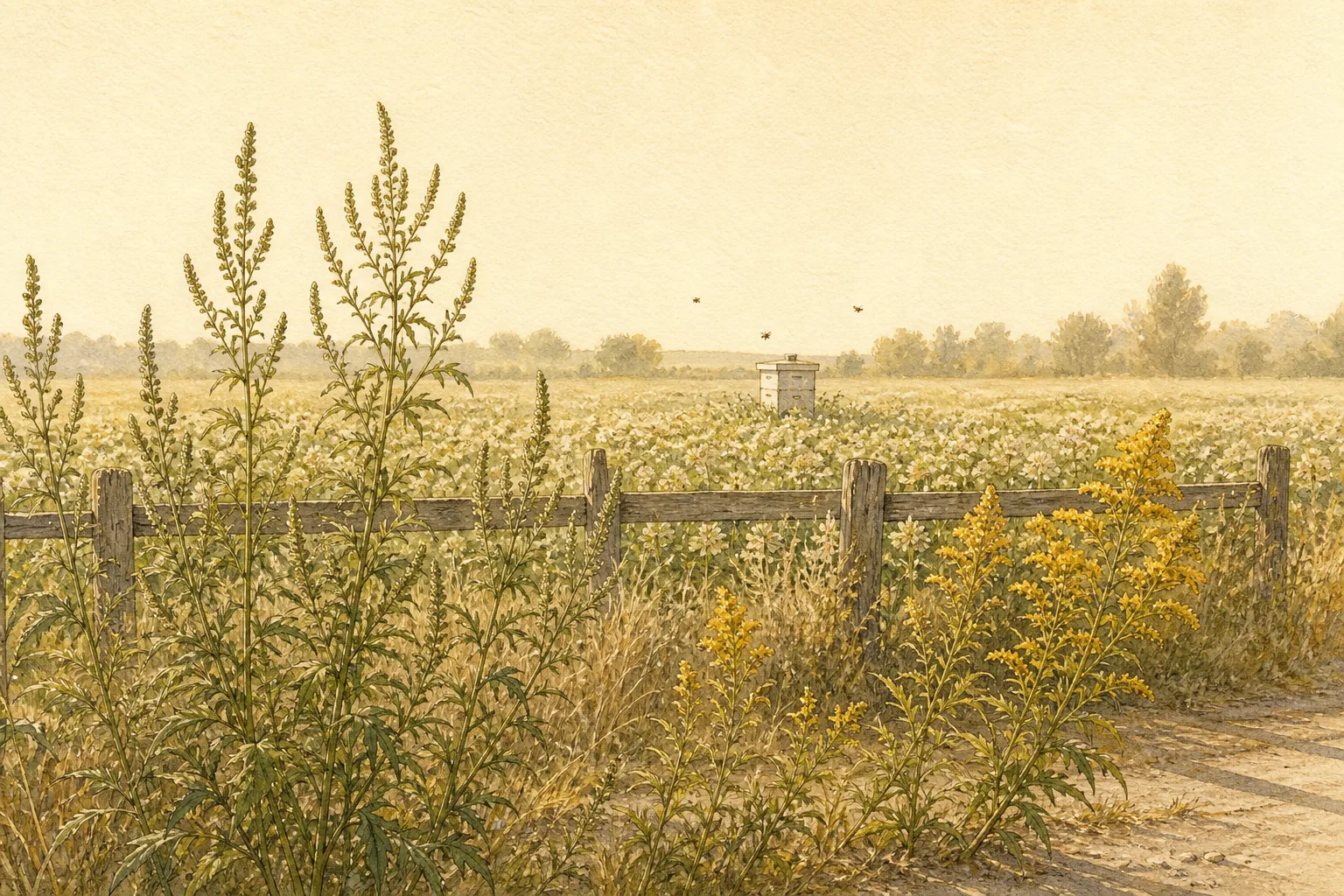
Ask ten people what local honey is good for and eight will say allergies. The idea is everywhere, it sounds sensible, and it moves a lot of honey at farmers’ markets. We’re a honey company in Lake County, Illinois. We would like nothing better than to tell you it works. So here is what we can say honestly.
The theory
It goes like this. Seasonal allergies are a reaction to pollen. Local honey contains local pollen. Eating a little of it every day exposes you to small doses of the thing you’re allergic to, and over time your immune system stops overreacting, the same way allergy shots work. It’s a neat story, and the last part, about allergy shots, is real medicine: doctors do desensitize people with controlled doses of allergen.
Where the theory runs into trouble
The pollen that causes most hay fever comes from plants that are wind-pollinated: ragweed, grasses, birch, oak, cedar. These plants make huge amounts of tiny, light pollen and throw it into the air, which is why it gets in your nose. Bees don’t visit them much. There’s little nectar in a wind-pollinated flower, so bees go to the showy, insect-pollinated plants: clover, basswood, fruit trees, wildflowers. The pollen in a jar of honey is mostly from those. It’s largely the wrong pollen.
The amounts are also tiny and uncontrolled. Allergy immunotherapy uses measured doses of a specific allergen. A spoon of honey contains a trace of many pollens in unknown proportions, and much of that is strained out even in raw honey. Even if the right pollen were in there, you couldn’t know how much you were getting.
What the studies found
There have been only a handful of proper trials, and they’re small. The most-cited one, from the University of Connecticut in 2002, gave people with seasonal allergies either local raw honey, national brand pasteurized honey, or honey-flavored corn syrup for several months and found no difference in symptoms between the groups. A 2013 study in Malaysia found that people taking a high daily dose of a local honey alongside their usual antihistamine reported more improvement than those on the antihistamine alone, but the honey dose was large, about a gram per kilo of body weight, and the study was small and not blinded in the way you’d want.
Put together, the evidence is thin, and what there is doesn’t support the idea that a spoon a day of local honey will fix your hay fever. Allergists don’t recommend it. If you find it helps you, we’re glad, and there’s no harm in it. But we’re not going to sell you a jar on that promise.
What honey does do
Honey has real, well-supported uses. It soothes coughs; enough trials have shown this that the World Health Organization lists it as a home remedy for children over one. It’s a good wound dressing under medical supervision, which is why medical-grade honey exists. It keeps forever, it’s a better sweetener for many things than sugar, and raw honey from one place tastes like the place. Those are the reasons to buy it.
A word about “local” itself
“Local” honey is a good thing to want, but for a different reason than allergies. Honey from a beekeeper who can tell you the field, the flower and the year is honey you can trust hasn’t been blended across continents or cut with syrup. That’s real. Our clover comes from the fields where it grows, our linden from a hillside in Wisconsin, our tupelo and Florida Red from the Panhandle, and all of it is bottled by hand in Lake County, Illinois. We’ll tell you exactly where each jar came from. We just won’t tell you it cures anything.