Kitchen notes · September 11, 2026 · 4 min read
Honey and cheese: which honey goes with which cheese
Sweet against salt is the oldest trick on a cheese board. A pairing guide for four honeys and the cheeses that bring out the best in each.
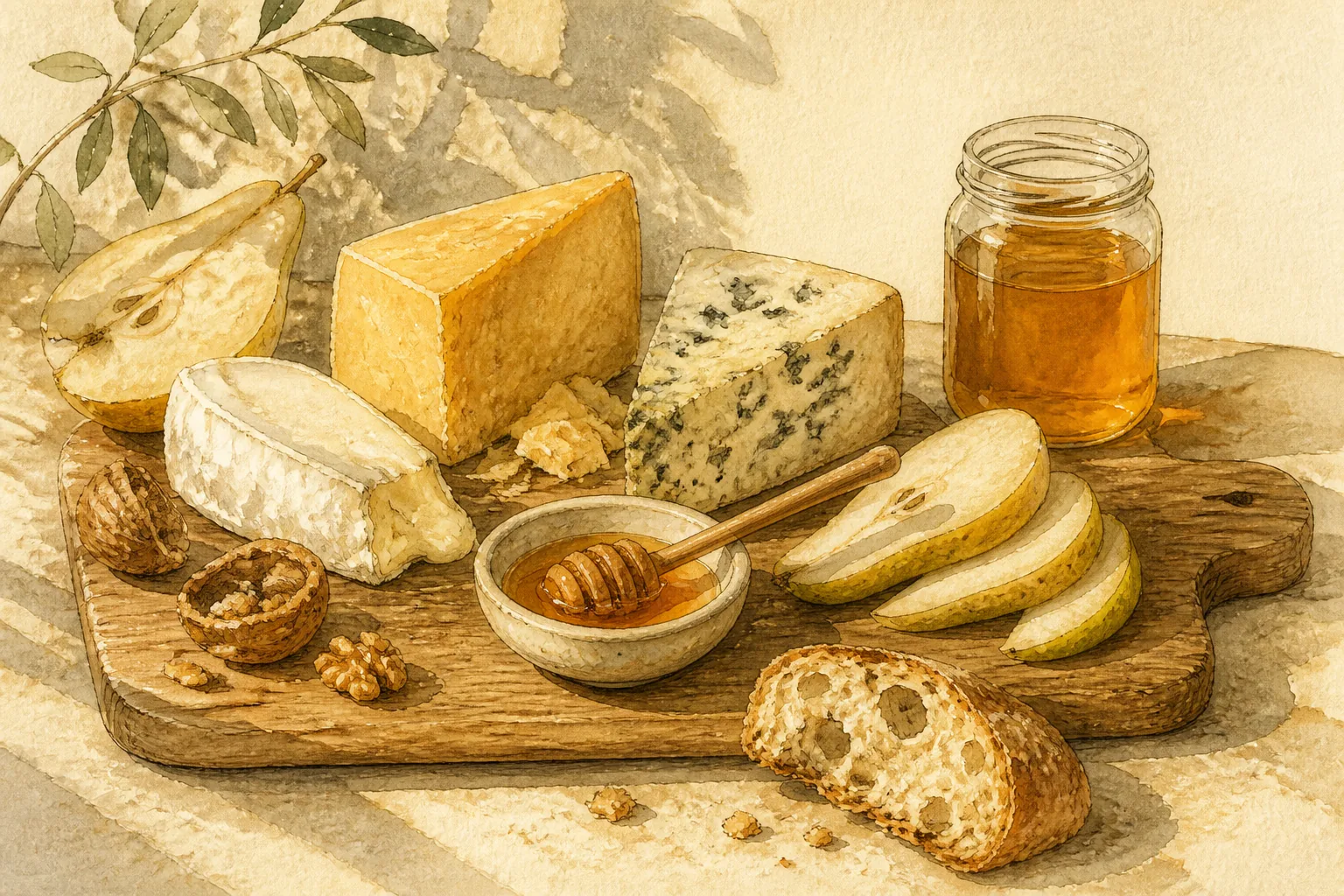
A drizzle of honey on a wedge of cheese is one of those things that shouldn’t be as good as it is. Salt and sweet, soft and sharp, fat and floral. It works with almost any honey and almost any cheese, but some pairings are better than others, and once you have four distinct honeys in the house it’s worth knowing which to reach for.
The rule of thumb
Match weight to weight. A mild, pale honey goes with a mild, fresh cheese; a dark, strong honey can stand up to something aged and sharp. If you break the rule, break it in one direction only: a strong honey on a fresh cheese can be lovely, but a mild honey vanishes against a stinky blue.
Honey should be at room temperature and liquid enough to drizzle. If your raw honey has set, stand the jar in warm water for half an hour. Set honey also works, spread thick, and looks handsome on a board.
White clover
Clover is soft, clean, and a little like cinnamon. It belongs with fresh and young cheeses where anything stronger would take over. Fresh goat cheese with a drizzle of clover and black pepper is the classic. Burrata, mozzarella, ricotta, brie, and young farmhouse cheddars all work. So does a plain slice of cream cheese on a cracker. Clover also goes into the batter for a honey cheesecake without arguing with it.
Linden
Linden’s minty, floral note wants something with a bit of tang. Goat cheeses again, especially aged ones with a rind. Feta, oddly, is very good with linden; the salt and the mint play off each other. Ricotta with linden honey, lemon zest and toasted almonds makes a dessert in two minutes. Linden with a wedge of Comté or a young Gruyère, the nutty Alpine cheeses, is a pairing that gets better the more you have of it.
Tupelo
Tupelo is buttery and gentle and it costs more than the others, so the goal is a cheese that lets it show. Triple-cream brie is the obvious partner: rich against rich, with the honey adding a floral note the cheese doesn’t have. Aged gouda, with its caramel crunch, is excellent with tupelo. And, for the pairing everyone should try once, tupelo on a mild blue like Gorgonzola dolce. The honey’s sweetness rounds off the blue’s bite in a way that converts people who think they don’t like blue cheese.
Florida Red
The strong one. Florida Red is tangy and deep, and it needs a cheese with attitude. Sharp aged cheddar, manchego, pecorino, aged Gruyère, or a hard, salty cheese like Parmesan broken into chunks. It’s also the best of the four with strong blues, Stilton or Roquefort, where its molasses depth meets the cheese head-on. On a board with cured meats, Florida Red is the honey that stands up to salami and prosciutto.
Building the board
Three cheeses and two honeys is plenty. A fresh cheese with clover, a hard aged cheese with Florida Red, and something in between. Add sliced pears or apples, walnuts or almonds, and bread that isn’t sweet. Put the honey in a small dish with a spoon or dipper rather than drizzling everything in advance; people like to do it themselves, and cheese sitting under honey for an hour goes soft and sticky.
One more, for breakfast
Warm toast, salted butter, a slice of sharp cheddar, and a spoon of Florida Red on top. Or thick yogurt, a crumble of feta, walnuts, and linden honey. Cheese and honey isn’t only for the end of the evening.
All four of our honeys come in one-pound glass jars, bottled by hand in Lake County, Illinois. They’re sold out until the first bottling lands; email us and we’ll let you know the day it does.