Raw honey, explained · September 1, 2026 · 5 min read
Raw honey vs. regular honey: what's actually different
Most grocery-store honey has been heated and pushed through a fine filter. Here is what those two steps take out, and what they leave behind.
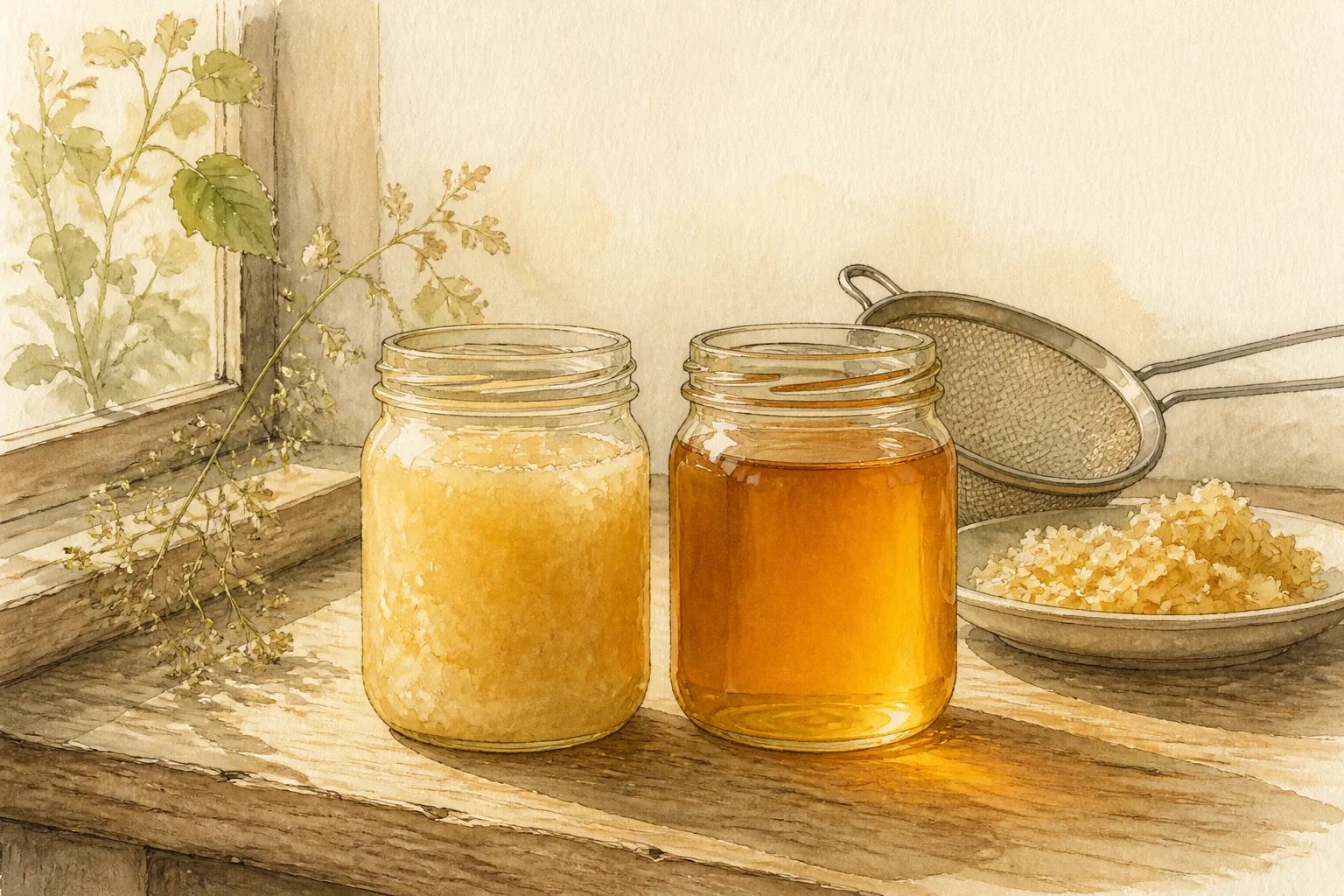
Stand two jars next to each other. One is perfectly clear, pours like syrup and has looked the same on the shelf for a year. The other is a little cloudy, smells of flowers when you open it, and has started to set. The first is what most people mean by honey. The second is raw honey. They started out the same. Two steps at the packing plant made the difference.
Step one: heat
Commercial honey is usually warmed to somewhere between 145°F and 160°F before bottling. There are practical reasons. Warm honey flows through pipes and filters easily, it can be bottled quickly, and heating dissolves any small crystals that had begun to form, so the jar stays liquid on the shelf for months. It also kills the wild yeasts that live in every drop of honey and could, in a jar with too much moisture, cause fermentation.
The cost is what the heat does to the things bees put in the honey. Bees add enzymes as they process nectar, mainly one that breaks starches down and one that converts sucrose into simpler sugars. Both are damaged by heat. The compounds that carry a honey’s aroma, the ones that make linden smell like linden, are volatile and heat drives them off. And prolonged heat produces a compound called HMF, which is harmless but is the standard lab test for whether a honey has been overheated or stored too long.
Raw honey skips this. It is extracted at hive temperature or slightly above, which is around 95°F, the same warmth the bees kept it at.
Step two: filtration
After heating, most commercial honey is pushed through filters fine enough to remove pollen. The result is a crystal-clear product that stays clear, because pollen grains and tiny wax particles are the seeds that crystals grow around. Take them out and the honey stays liquid much longer.
Raw honey is strained, not filtered. It goes through a coarse mesh that catches wax cappings, the occasional bee part, and anything large, and lets everything else through. Pollen stays in. Propolis, the resin bees use to seal the hive, stays in. That is why raw honey is cloudy and why it eventually sets.
Pollen is also how a honey is identified. A lab can look at the pollen in a jar and tell you what flowers it came from and, roughly, where. Honey with the pollen removed can’t be traced, which is one reason ultra-filtered honey is treated with suspicion in the trade.
Does raw honey taste different?
Yes, and more than most people expect. Heated, filtered honey from a big packer is usually a blend from many sources, and the heat has rounded off whatever character was there. It tastes sweet, and that is most of what it tastes like.
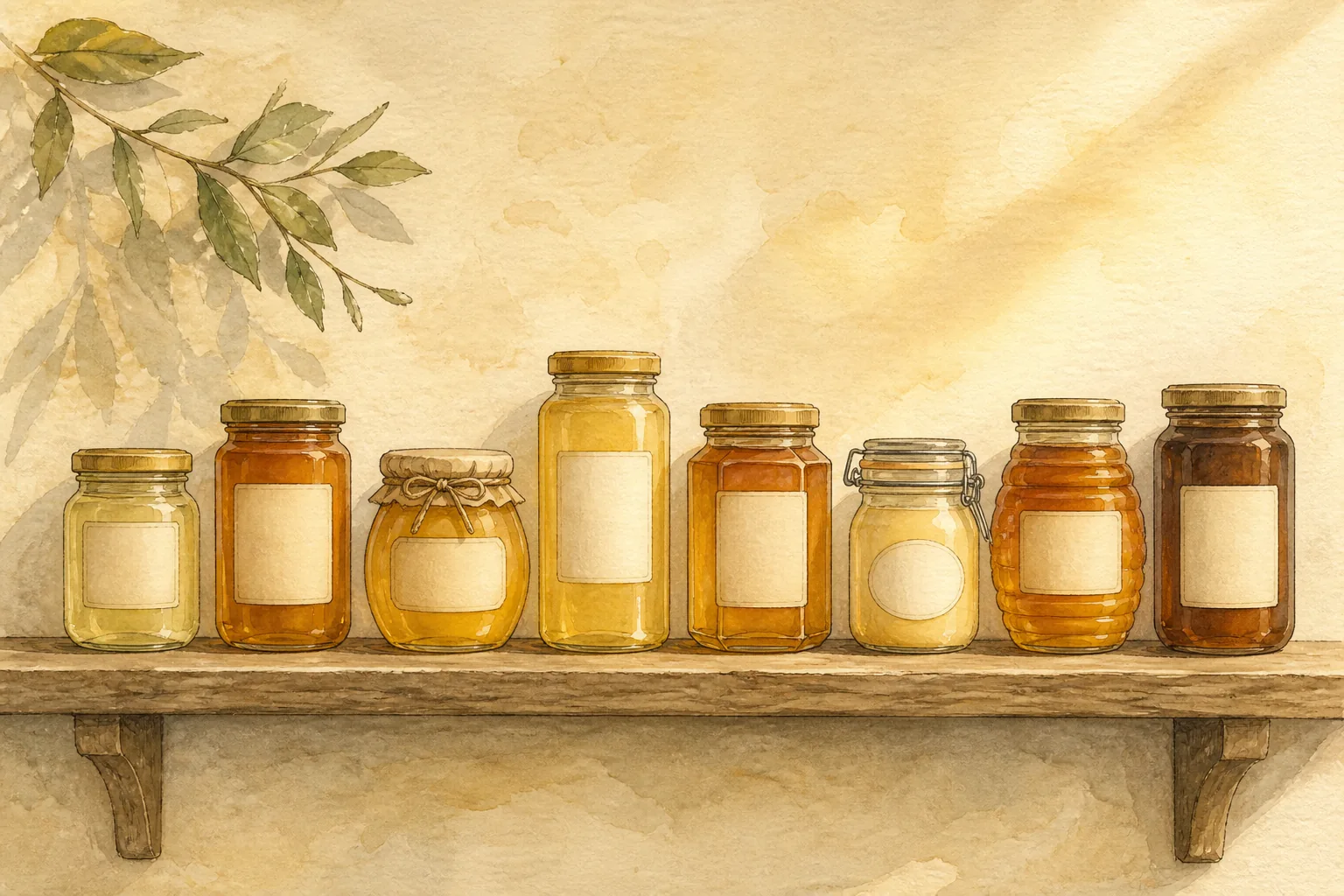
Raw single-source honey tastes like its flower. Clover is soft and a little like cinnamon. Linden has a green, minty edge. Tupelo is buttery. Florida red is tangy and bold. Put them side by side and they are as different from each other as four wines.
What raw does not mean
“Raw” is not a legally defined term in the United States, so it is worth knowing what it doesn’t guarantee. Raw honey is not sterile; it contains wild yeasts and, sometimes, botulism spores, which is why no honey, raw or otherwise, is given to babies under one. Raw honey is not organic; that’s a separate claim. And raw honey is not automatically local or single-source. A jar labeled raw could still be a blend from three countries, as long as nobody heated it.
The reliable signs of raw honey are simple: it’s a bit cloudy, it smells like something when you open it, and sooner or later it crystallizes. If a jar has sat clear and liquid on a shelf for two years, it was almost certainly heated.
What we do
Ours is extracted from the comb, strained once through a mesh that catches wax and nothing finer, and bottled by hand in Lake County, Illinois. It has never been heated above the temperature of the hive. It will set eventually, and when it does, a warm-water bath brings it back. That’s the whole process. The bees did the rest.