Raw honey, explained · August 29, 2026 · 5 min read
What's actually in a jar of honey
Nectar, a little water, a lot of bee work, and nothing else. Here's how a field of flowers ends up as a pound of gold on your counter.
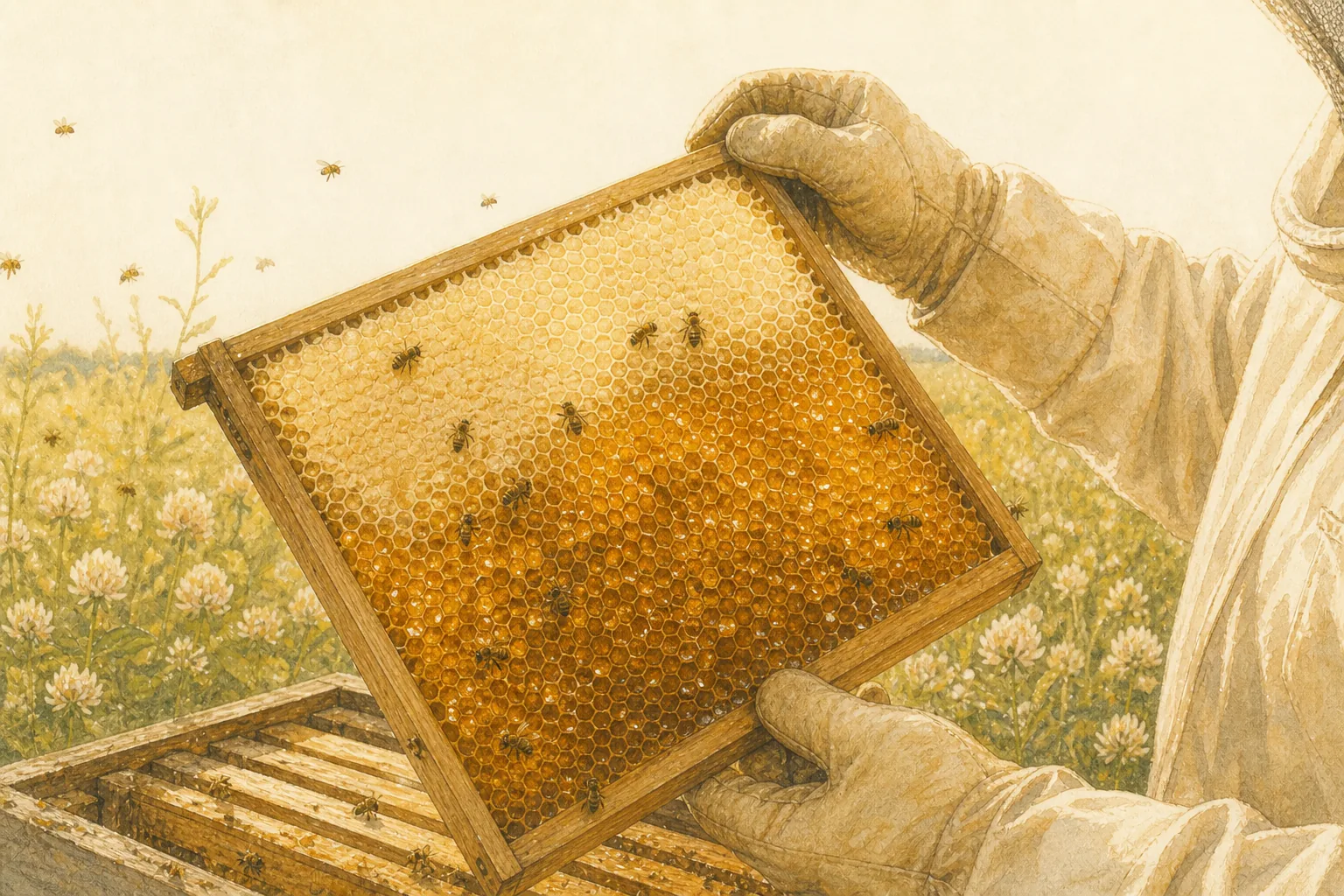
Honey starts as nectar, which is mostly water with some sugar in it. Flowers make it to bribe insects into carrying pollen around, and a foraging bee will visit a few hundred blossoms on one trip to fill her honey stomach. Back at the hive she hands it to a house bee, who passes it to another, and with each pass the bees add enzymes that break the nectar’s sucrose into simpler sugars, glucose and fructose. That is the first thing happening in the jar: honey is sweet in a different way than table sugar because bees have already done part of the digesting.
Then the bees dry it. Nectar is around seventy percent water. Honey is under eighteen. The colony spreads the thin nectar across the comb in a film and fans it with their wings, thousands of them at once, until enough water has evaporated that nothing can spoil it. When a cell is ready, they cap it with a thin lid of wax. That cap is the beekeeper’s signal. A frame that is mostly capped is finished honey; a frame that is still open is nectar that isn’t ready, and pulling it early gets you something wet that will ferment.
So what is in the jar? About eighty percent sugars, mostly fructose and glucose in a ratio that changes with the flower. A little water. A trace of acids that give honey its bite and keep bacteria out. Enzymes the bees put there. Tiny amounts of minerals and vitamins. And, in raw honey, pollen, specks of wax, and propolis, the resin bees use to seal the hive. None of that is an ingredient list, because nothing was added. It is just what the bees made.
Why every jar tastes different
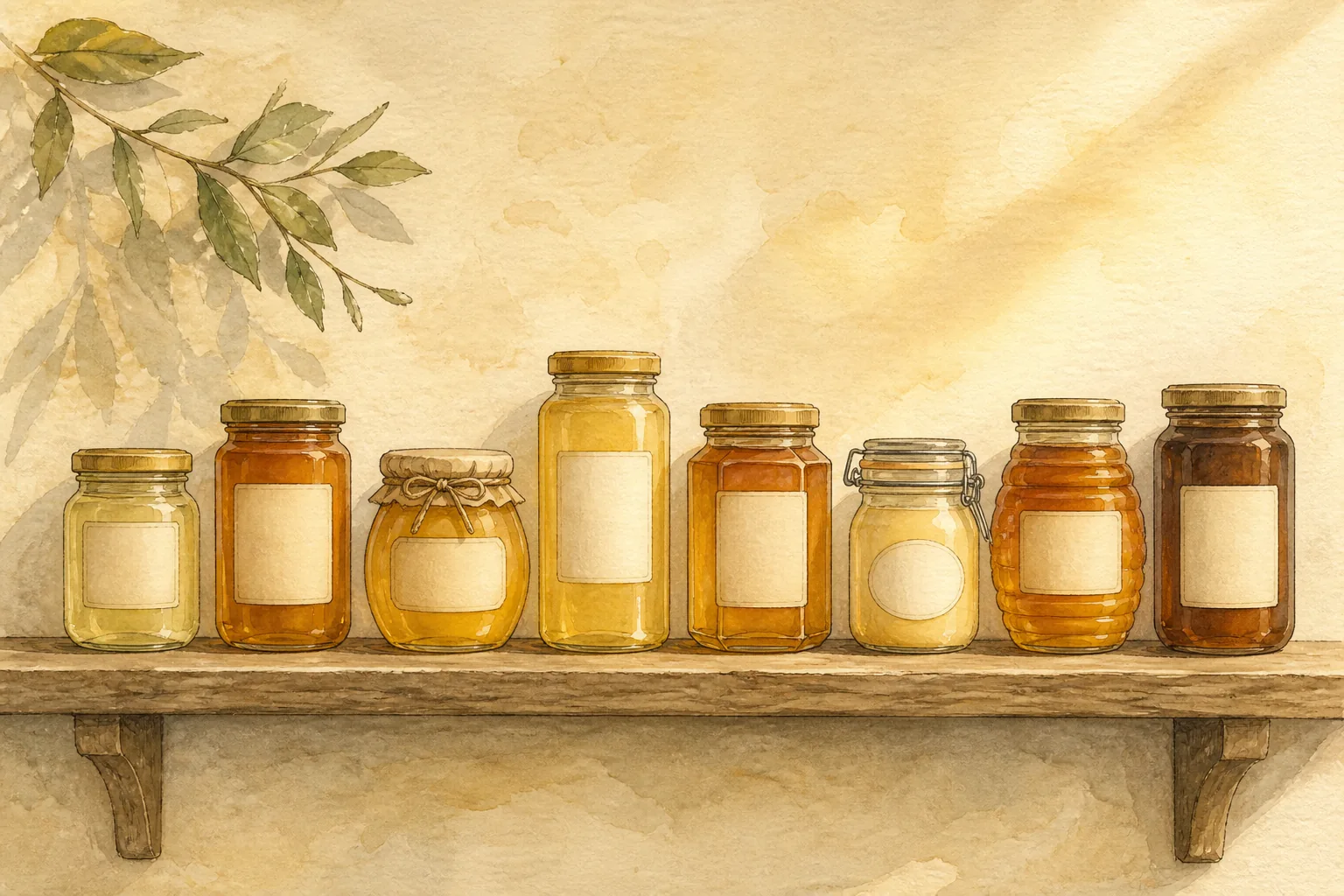
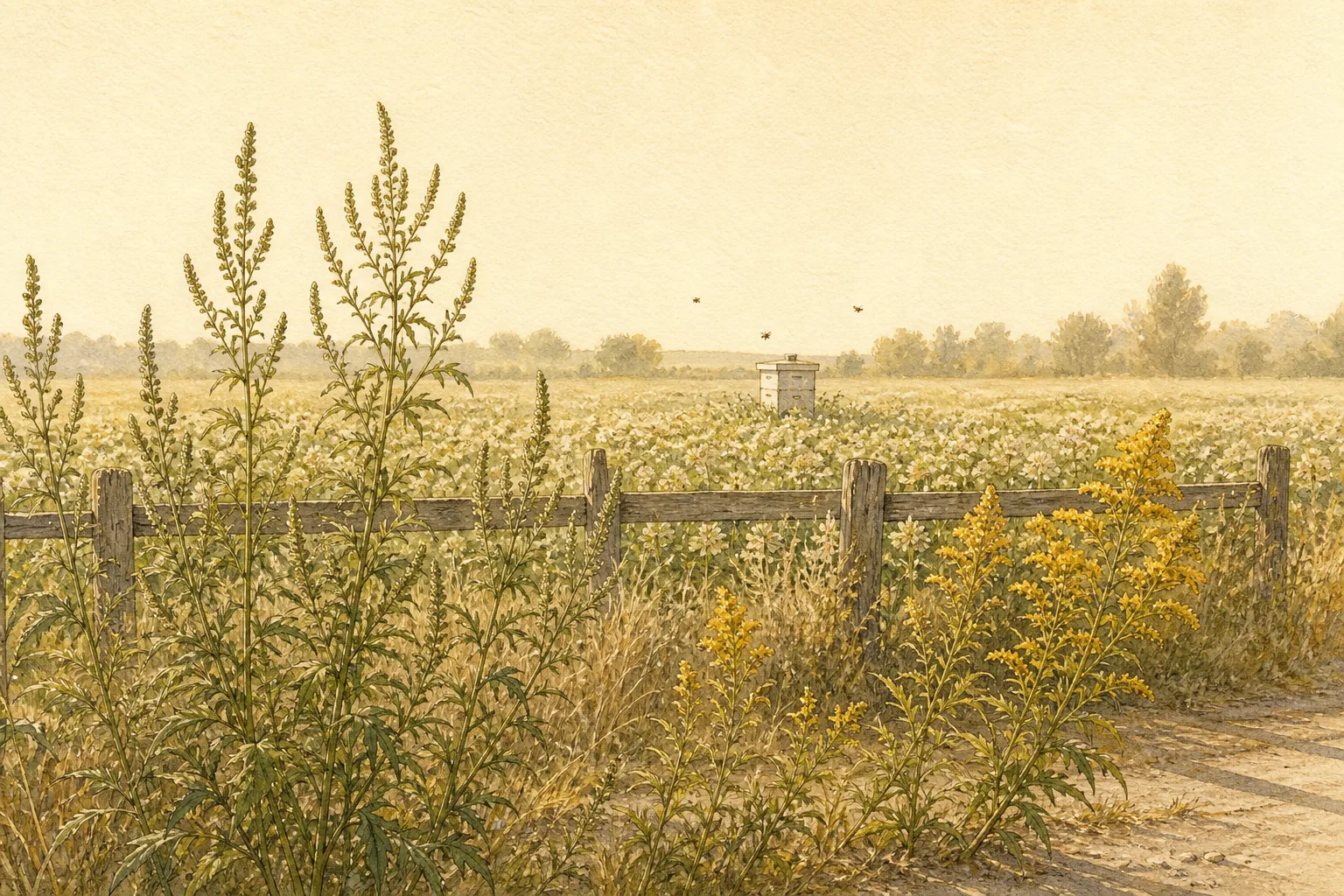
Honey takes its flavor from the nectar, and nectar is different in every flower. Clover nectar makes a honey that is light and clean. Basswood makes one that is floral with a menthol edge. Buckwheat, a small plant with tiny white flowers, makes a honey so dark and malty that people mistake it for molasses. The color follows the same rule. Pale honey is almost always mild; dark honey almost always has more going on. Most honey sold in grocery stores is a blend, gathered from wherever the bees happened to go and mixed across drums until it tastes like nothing in particular. Single-source honey is the opposite idea. You put the hives where one flower is blooming, pull the frames when it stops, and bottle that on its own.
The season matters too. The same field of clover in a wet June and a dry one will give honey that tastes slightly different, and a beekeeper who has worked a place for years can usually tell you which year a jar came from.
What “raw” means
Raw is not a legal term in most places, so it helps to know what people mean by it. Commercial honey is usually heated to well above hive temperature so it stays liquid on the shelf, then pushed through fine filters that remove pollen and anything cloudy. It looks clear and stays pourable for a long time. It also loses some of what made it honey: the heat damages the enzymes, and the filtering takes the pollen out.
Raw honey skips both steps. It is extracted from the comb, strained through a coarse mesh to catch wax and bee parts, and bottled. It is cloudier. It has a smell when you open it. And, because the glucose in it wants to form crystals, it will set up solid in the jar after a few weeks or months, which is the surest sign you have the real thing. An overnight bath in warm water brings it back.
Why it never goes bad
Sealed honey does not spoil. There is too little water for anything to grow in it, the acidity is low, and the bees have laced it with a little hydrogen peroxide from one of their enzymes. Jars found in Egyptian tombs were still edible. Your pantry is a gentler place than a tomb, so a jar of raw honey with the lid on tight will outlast you. What it will do is crystallize and, over a very long time, darken and lose some aroma. Neither one hurts it.
Keep the lid on, keep it out of the sun, and don’t refrigerate it. That’s the whole set of instructions. The bees did the hard part.