Single-source honey · August 18, 2026 · 4 min read
Why tupelo costs five dollars more
One tree, one river system, one short window each spring, and a honey that never crystallizes. That's what you're paying for.
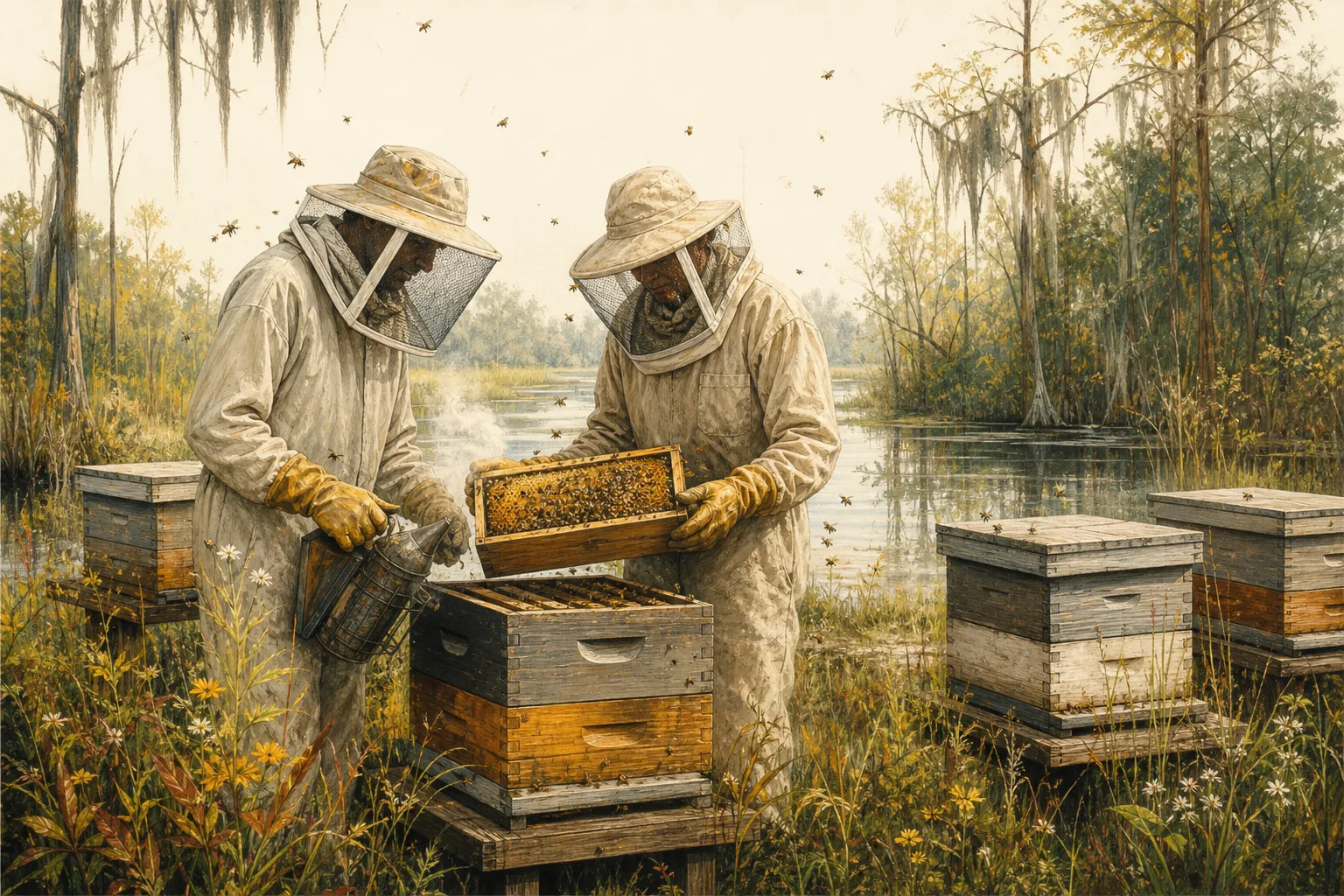
Most honey is a blend of whatever was blooming within a few miles of the hive. Tupelo is not. It comes from one tree, the White Ogeechee Tupelo, which grows in the river swamps of northwest Florida and blooms for two or three weeks each spring.
To catch it, beekeepers move hives onto platforms and barges along the river just before the bloom and pull them the moment it ends, so nothing else gets into the comb. Miss the window by a week and you have a different honey.
The result is pale amber, buttery and mild, and unusually high in fructose, which is why pure tupelo stays liquid when every other raw honey sets. It is graded on exactly that: honey that crystallizes was cut with something else.
So the extra five dollars buys a short season, a lot of moving of hives, and a jar that will still pour next year.