Kitchen notes · September 5, 2026 · 4 min read
Does hot tea ruin raw honey? Mostly no, and here's when to add it
The internet says heat destroys raw honey. The truth is smaller and more useful. What hot water actually does to honey, and the one-minute trick that keeps the flavor.
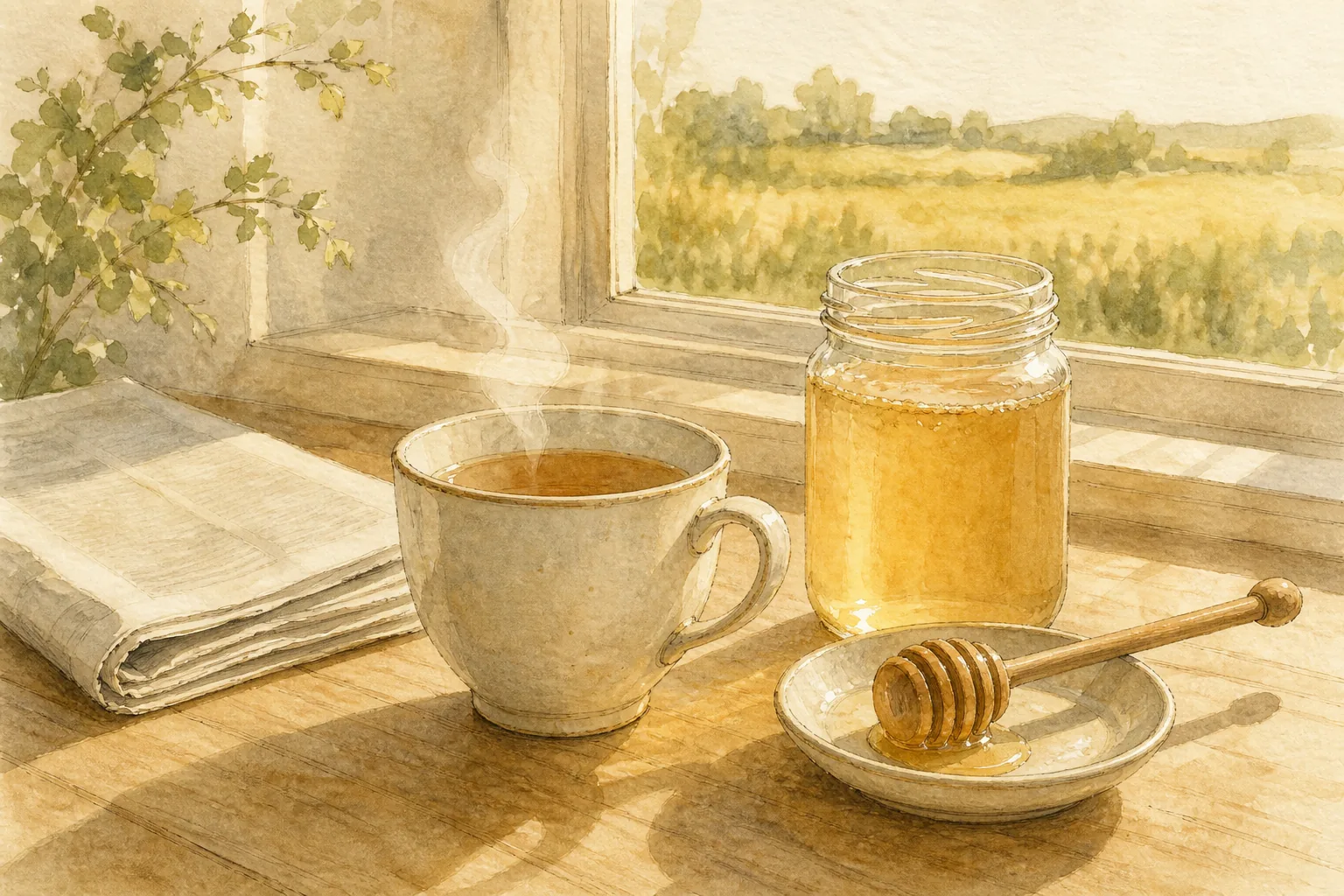
Somebody, somewhere, will tell you that putting raw honey in hot tea “kills” it, turns it toxic, or makes it no better than sugar. Let’s sort out what’s true.
What heat does to honey
Three things in raw honey are sensitive to heat. The enzymes the bees add during processing start to break down above about 104°F and degrade quickly above 140°F. The aromatic compounds that give a honey its smell are volatile, and heat drives them off; this is why a warmed jar of linden smells so strongly for a minute and then smells like less. And prolonged heating slowly produces a compound called HMF, which is used in labs to detect honey that was cooked or stored too long.
None of this makes honey harmful. Honey heated to a boil is still honey, still safe, still sweet. Commercial honey is heated to around 160°F on purpose, and people have eaten it for a century. The idea that heated honey becomes toxic comes from a line in traditional Ayurvedic texts, not from anything a lab has found.
What heat does is make raw honey more like ordinary honey. You lose some of what you paid extra for.
How hot is tea?
Water boils at 212°F. Black tea is steeped near that, green tea a bit lower. But by the time you’ve poured it into a cup and it has sat for a minute, it’s usually between 160°F and 180°F, and most people don’t drink tea until it’s below 150°F.
So a spoon of honey stirred into freshly poured tea sees a brief spell at 170°F or so while it dissolves, and then the whole cup cools together. That is enough to knock down the enzymes and blow off some aroma. It’s not enough to do much else. If your reason for buying raw honey is the taste, you’ll notice the difference most in a strong-smelling honey like linden or tupelo, and not much at all in a mild clover.
The one-minute trick
Let the tea cool for a minute or two before you add the honey. Better still, wait until it’s at drinking temperature, around 130°F to 140°F, which is when you’d be sipping it anyway. At that point the honey dissolves in a few stirs, the enzymes largely survive, and the aroma stays in the cup instead of rising off it. You’ll taste more of the honey. That’s the whole trick.
If you like a very hot cup, put the honey in the bottom of the mug, pour the tea, and drink it. You’ve lost a little. Nobody’s health was affected.
Which honey for tea
Linden is the traditional tea honey in much of Europe and it’s easy to see why: its minty, floral aroma sits naturally in a cup of black tea or chamomile. Tupelo is buttery and mild and disappears into tea in the nicest way, sweet without any edge. Clover is the everyday choice and never wrong. Florida Red is strong enough to change the character of the tea, which is good in a robust black tea with milk and less good in a delicate green.
Honey and lemon for a sore throat
Honey does soothe a cough. Enough trials have found this that the World Health Organization lists it as a reasonable remedy for coughs in children over one year old (never under one; see our note on honey and babies). Warm water, lemon, and a spoon of honey is a good drink for a scratchy throat. Warm, not boiling, works for the same reasons above. And honey straight off the spoon, which coats the throat, is at least as effective as honey in the drink.
Our jars are meant to be used, and tea is one of the best uses there is. Just give the cup a minute first.