Kitchen notes · August 31, 2026 · 4 min read
How to store honey so it stays good forever
Lid on, out of the sun, never in the fridge. Honey is the one thing in your pantry that does not expire, as long as you don't help it along.
People ask us two questions more than any other. Does honey go bad, and where should I keep it. The answers are no, and almost anywhere. But there are a few ways to make a good jar worse, so here is the whole of it.
Why honey doesn’t spoil
Honey is about eighty percent sugar and less than eighteen percent water. That is too dry for bacteria or mold to grow in, the way jam and syrup are too sweet to spoil quickly but honey takes it further. It is also mildly acidic, and the bees add an enzyme that produces a trace of hydrogen peroxide. Between the three, nothing that lands in a sealed jar of honey can live there. Archaeologists have opened jars from Egyptian tombs and found the honey still edible. Yours will manage a few years on the counter.
The “best by” date printed on a jar is a legal formality, not a warning. Honey past the date is honey.
Where to keep it
A cupboard or pantry shelf at room temperature is the right place. Honey does not need to be cold, and it does not like light. Sunlight on a windowsill will slowly darken it and take the aroma out, so keep it somewhere dim.
Keep the lid on tight. Honey pulls moisture from the air, and if it sits open in a humid kitchen for weeks the top layer can take on enough water to start fermenting. You’ll smell it before you taste it, a little sour and boozy. That is the one way honey actually goes off, and it only happens with the lid off.
Do not refrigerate it
This is the one that surprises people. The refrigerator is the worst place for honey. Raw honey crystallizes fastest at about 57°F, which is warmer than your fridge but the cold still pushes it that way. Within a few weeks a refrigerated jar is solid and hard to spoon. It hasn’t gone bad, but you have made work for yourself.
The freezer, oddly, is fine. Very cold temperatures slow crystallization almost to a stop, and honey does not freeze solid, it just gets thick. Nobody needs to freeze honey, but if you have a case of it and want a jar to stay liquid for a year, the freezer will do that.
When it turns cloudy or solid
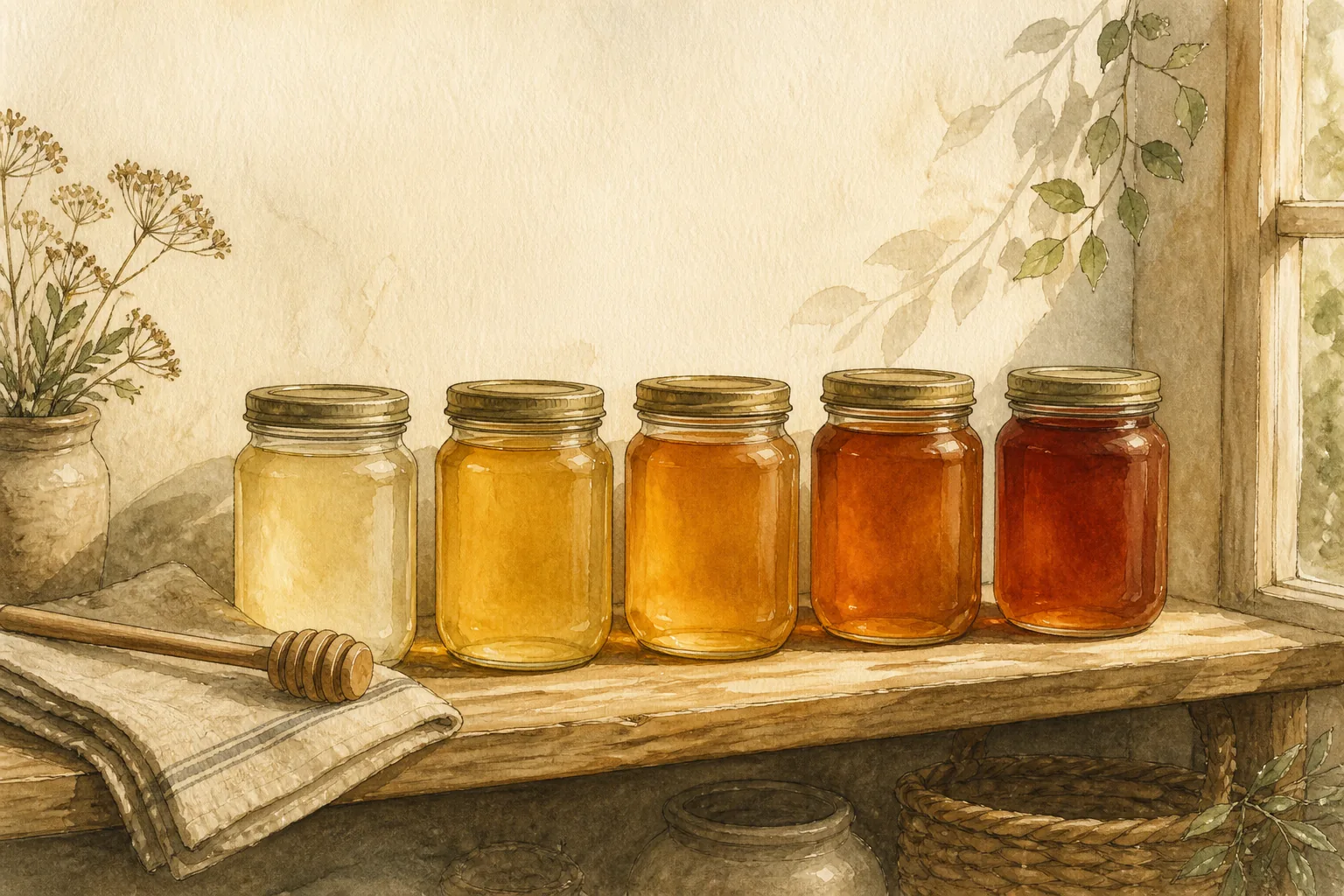
Raw honey sets. It is supposed to. The glucose in it forms crystals over weeks or months, and the jar goes from clear to cloudy to firm. Clover and linden do it fairly quickly; tupelo almost never does. None of it is a problem. Set honey spreads on toast better than liquid honey, and plenty of people prefer it.
To bring it back, stand the jar in a bowl of warm tap water, not boiling, and leave it for an hour or overnight. Do not microwave it. High heat cooks the honey, flattens the flavor and takes out the enzymes that make raw honey worth buying. We wrote a longer piece on this: Your honey turned solid. That’s the good news.
Glass versus plastic
Either works. Glass doesn’t absorb flavor and is easier to warm in a water bath, which is why we bottle in it. If you decant from a large container, use a clean, dry jar. A wet spoon or a few drops of water in the jar is how you introduce the moisture that lets fermentation start.
The short version
Lid on. Cupboard, not fridge. Out of the sun. Warm water, not the microwave, when it sets. Do that and the last spoonful will taste like the first, whether that is next month or five years from now.